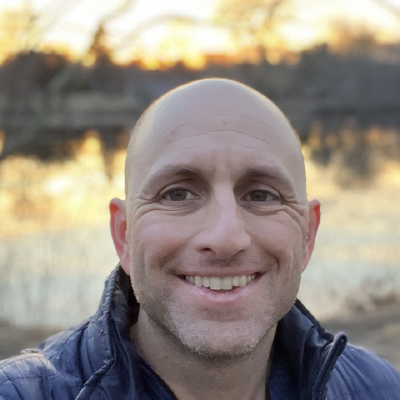
Started as a scientist — molecular biology at UCSF, cancer research. Realized early that tools have more leverage than publications. Made the jump to tech. Fifteen years later: Facebook, Walmart Labs, J&J. Products used by billions. More than a few spectacular failures. Both teach you something.
Then in 2018, I was the patient. New dad, cancer diagnosis. The system gave me data. What I needed was a framework.
So I built one. Probability trees. Second opinions. I PM'd my own treatment. That framework probably saved my life — and it made healthcare permanently personal.
Now I run Cancer Hacker Lab, a healthtech accelerator, and build Navis Health — AI-powered second opinions for cancer patients who don't know how to fight back yet.
Why axestack?
Working with founders, I kept seeing the same stuck pattern: smart people, good ideas, no signal. Not because the ideas were bad — because validation was too slow, pitches were too muddy, and the tools were scattered across a dozen apps that didn't talk to each other.
Axestack is the stack I use — mostly Claude skills. Think of it as a compressed knowledge base and best practices to get things done. An AI toolbelt for founders.
What I Believe
- •Speed is the corrective. Reality fixes self-delusion faster than any advice.
- •Earn your dopamine. The things that matter come from real immersion, not shortcuts.
- •Bloat is a symptom. You can always tell when software was built by committee.
- •Pull over push. Build things you'd build even if you didn't need the money.
- •Don't smooth the spikes. Differences are the edge — nurture them.
- •Physics is the only real limit. Everything else is a constraint you can redesign.
Operating Systems
I organize everything I build into systems by domain.
Vitality OS · Family OS
Health, longevity, and family systems. Coming soon.
Field Notes
Writing on building, health, and life experiments →
Let's build something.